Equipment
How to choose a hiking rucksack
Capacity in litres by walk duration, torso fit, load-carrying systems and how to try a rucksack before buying it.
The ideal capacity for a full day is usually between 25 and 35 litres. It is essential that the size fits your torso and that the hip belt sits on your hip bones. When packing it, place the heaviest items close to your back at shoulder-blade height.
7 min read · updated 14 September 2026
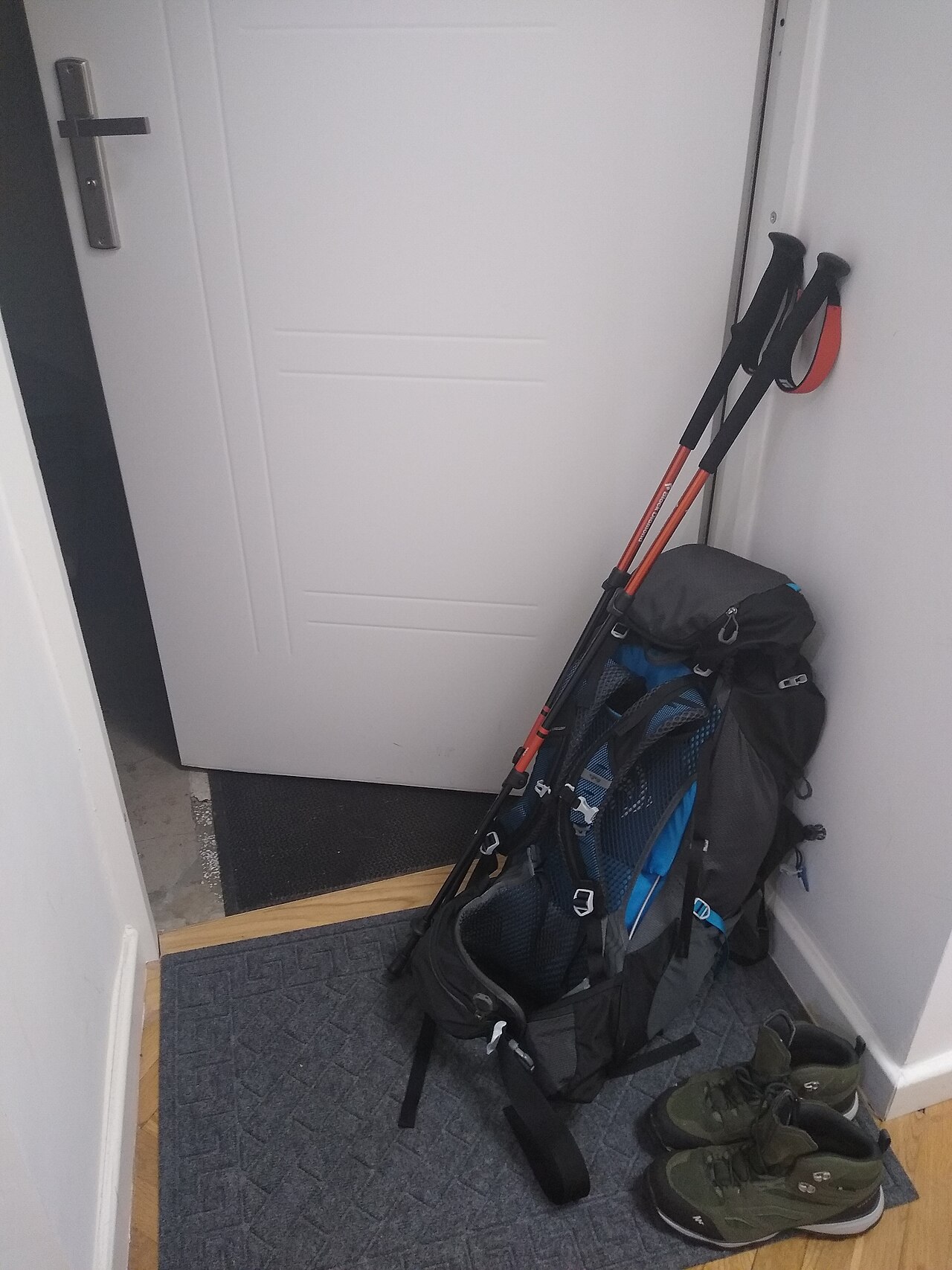
Photo: SGrabarczuk (WMF) · CC BY-SA 4.0 · via Wikimedia Commons
Capacity is not the most important thing about a rucksack: fit is. A well-fitted 30-litre rucksack is more comfortable to carry when loaded than a poorly sized 45-litre one.
How many litres?
- 15–22 l: outings of 2 to 4 hours, with water, food and a layer of clothing.
- 25–35 l: a full day, including a walk of around 6 hours with warm clothing, waterproofs and a first aid kit.
- 35–45 l: hut-to-hut treks where you do not carry a tent or cooking equipment.
- 50–70 l: fully self-sufficient trips with a tent, sleeping bag and food for several days.
If you are unsure between two sizes, choose the smaller one. A large rucksack ends up being filled simply because there is space.
Fit: measure your torso, not your height
The size depends on the distance between the C7 vertebra (the bump at the base of your neck when you tilt your head forwards) and the line of the iliac crest, at hip level. Many brands offer two or three back lengths and women's-specific models, with more curved shoulder straps and a more angled hip belt.
- Load the rucksack in the shop with around 6–8 kg of actual weight.
- Fasten the hip belt first: it should rest on your hip bones, not your waist.
- Then adjust the shoulder straps without letting them take all the weight.
- Tighten the upper compression straps to bring the load closer to your back.
- Walk for five minutes: the weight should rest on your hips, not your shoulders or neck.
Features you will actually use
- Front or side access: avoids having to empty the rucksack to get something from the bottom.
- Hip belt pockets for things you want to reach without stopping.
- A compartment or hose port for a hydration bladder.
- A practical walking pole holder that you can use without taking off the rucksack.
- An included rain cover or a back panel with some water resistance.
No rucksack is waterproof on its own. Keep your warm clothing in a dry bag or a simple, sturdy plastic bag.
Sources and references
General safety information only. It does not replace specific mountain training or emergency services (112 in Spain and the EU).