Gear
How to Choose Hiking Boots
Boot height, soles, waterproofing, and sizing: how to choose hiking footwear for the terrain you actually hike.
Choose your footwear based on the terrain: low-cut shoes for flat trails and mid- or high-cut boots for mountain hiking and rocky terrain. Look for soles with deep lugs to prevent slipping, and make sure there's a centimeter of space in front of your longest toe to avoid discomfort on descents.
8 min read · updated September 14, 2026
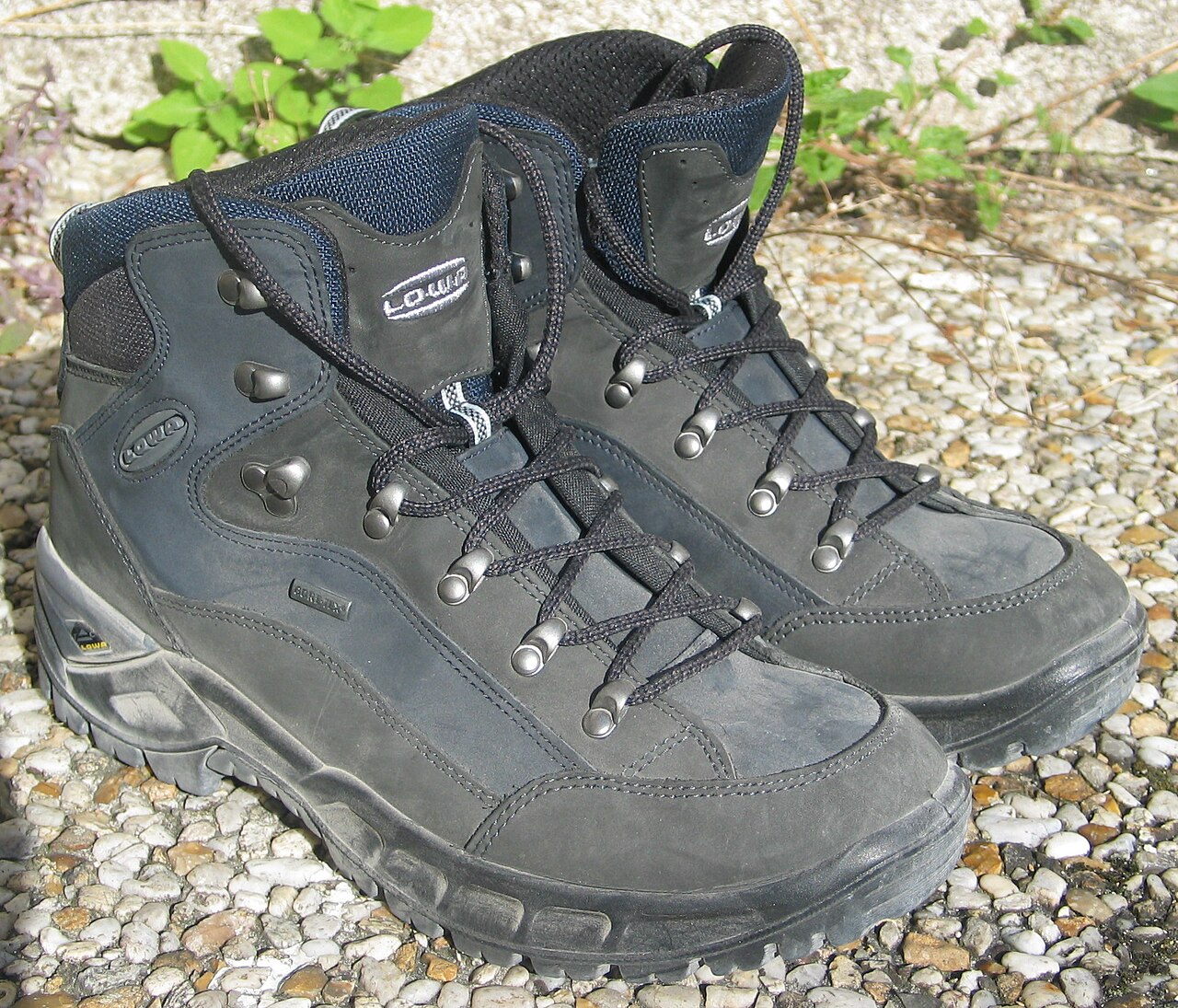
Photo: DocteurCosmos · CC BY-SA 3.0 · via Wikimedia Commons
There's no such thing as “the best boot”: there's the right boot for your terrain, the load you carry, and the shape of your foot. Decide in this order: boot height, sole, waterproofing, and size.
Boot height: how much support you need
- Low-cut (hiking shoes): marked trails, little elevation change, and a light backpack. More comfortable and lighter, with less ankle protection.
- Mid-cut: the most versatile option for mid-elevation mountains, loose rock, and a daypack.
- High-cut with a stiff sole: treks with a heavy backpack, rocky terrain, or hard snow and crampons.
A high-cut boot won't prevent a sprain on its own, but it does reduce ankle movement when carrying a load and on uneven terrain. The trade-off is more weight and less breathability.
Soles: tread and stiffness
Look for deep, well-spaced lugs that shed mud and a defined heel that provides braking on descents. Lengthwise stiffness keeps the sole from bending over rocks: the rockier the terrain, the more you'll appreciate that stiffness. Also check that the rubber compound grips wet rock; that's where most slips happen.
Waterproofing: not always better
A waterproof, breathable membrane is useful in wet weather, snow, and mud. In dry summer weather or very hot areas, a boot without a membrane breathes much better and dries faster if it gets wet. If your usual terrain is dry, don't pay for a membrane.
Sizing: where people most often go wrong
- Try them on in the afternoon, when your feet are slightly swollen, wearing the socks you'll use.
- Leave about a centimeter of room in front of your longest toe: your foot slides forward on descents.
- With your foot pushed forward in the unlaced boot, you should be able to fit a finger behind your heel.
- With the boots laced and while standing, your heel should not lift when you walk. That movement is the main cause of blisters.
- Walk up and down a ramp in the store before deciding.
Many brands use different lasts for wide and narrow feet. If a model feels tight across the ball of your foot, the issue isn't the size: it's the last.
Breaking them in and caring for them
Wear them on short, flat walks before taking them on a long hike. After each outing, remove mud with water and a brush, take out the insoles, and let the boots dry in the shade, away from radiators: direct heat hardens and cracks soles and adhesives.
When to replace them
When the heel tread is rounded off and you slip on descents, when the toe starts separating, or when the midsole stays permanently compressed. A smooth sole is a real fall hazard, not a cosmetic issue.
Sources and references
General safety information only. It does not replace specific mountain training or emergency services (112 in Spain and the EU).