Beginners
How to Start Hiking
A practical guide to your first hike: how to choose a route, what to bring, how to pace yourself, and which mistakes to avoid on your first day.
For your first hike, choose a marked route between 6 and 10 kilometers long with less than 300 meters of elevation gain. You'll need comfortable, broken-in footwear, enough water, and a buffer of daylight. Estimate your hiking time using 4 km/h on flat terrain, and add 10 minutes for every 100 meters of ascent.
8 min read · updated September 14, 2026
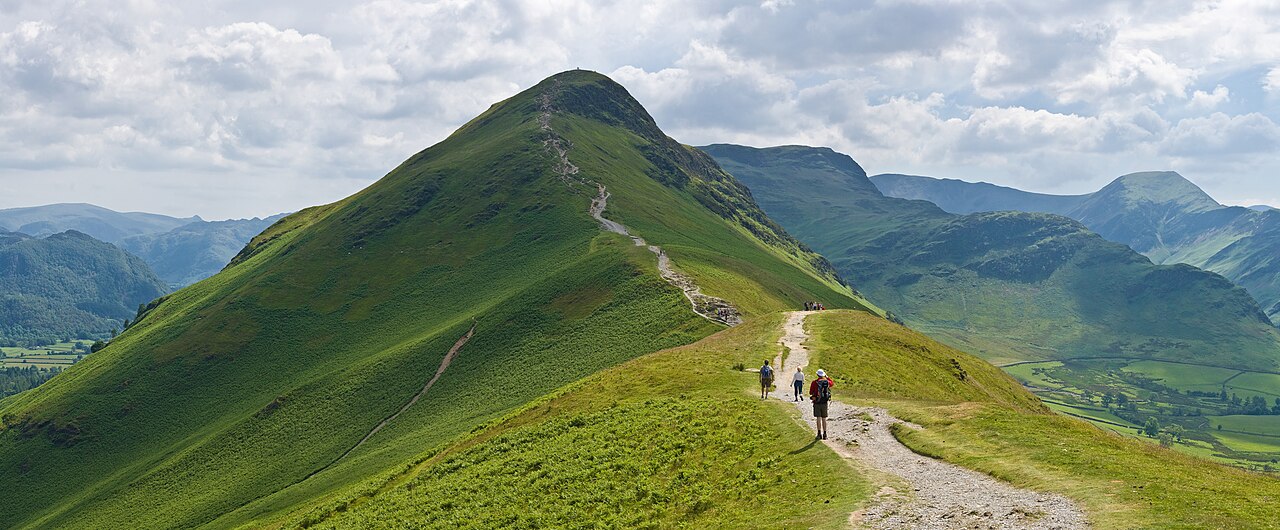
Photo: Diliff · CC BY-SA 3.0 · via Wikimedia Commons
You don't need expensive gear or a particular level of fitness to start hiking. You need a route suited to your ability, footwear you've already worn, enough water, and daylight to spare. Almost all first-day problems come from choosing a route that's too long or starting too late.
1. Choose a route you can finish without pushing yourself
For your first outing, look for a marked route between 6 and 10 kilometers long with less than 300 meters of cumulative elevation gain and the option to turn back at any point. Officially certified short-distance trails (PR, marked in white and yellow) are often a good fit: they have trail markers and published descriptions.
Elevation gain is what tires you out most, far more than distance. Ten flat kilometers are a long walk; ten kilometers with 900 meters of climbing are a full day in the mountains.
2. Estimate your time before you leave
A conservative estimate that's sufficient for getting started: 4 km/h on flat ground, plus 10 minutes for every 100 meters of climbing, plus breaks. An 8 km route with 250 m of climbing works out to around 2 h 30 min of moving time, which can easily become 3 h 15 min with breaks.
Then factor in the sunset time and subtract at least an hour as a buffer. If the timing doesn't work, shorten the route; don't pick up the pace.
3. What to bring on your first day
- Closed-toe footwear with deep tread that you've already worn several times.
- Between 1.5 and 2 liters of water per person for a half-day hike; more if it's hot or there are no reliable water sources.
- Simple food: fruit, nuts, a sandwich, something salty.
- Three layers: a moisture-wicking shirt, a fleece or lightweight sweater, and a waterproof, windproof jacket, even if the forecast is clear.
- A hat, sunglasses, and sunscreen; solar radiation is more intense in the mountains.
- A charged phone with a map of the area downloaded for use without cell service.
- A basic first-aid kit: blister dressings, medical tape, gauze, and your regular medication.
- A headlamp or small flashlight, even if you don't plan to return after dark.
Cotton doesn't dry and chills you when you stop. It's the most common clothing mistake on a first outing.
4. Pace: you should be able to talk
The right pace lets you hold a conversation. If you're out of breath, you've been going too fast, and you'll feel it in the second half. On climbs, take shorter steps instead of forcing a longer stride, and take short, frequent breaks rather than one long stop.
5. Tell someone where you're going
Before heading out, tell someone which route you're taking and what time you expect to return. It costs nothing and is the single most effective way to speed up a search if something goes wrong. In Spain, the emergency phone number is 112.
6. Common mistakes you can avoid
- Wearing new hiking boots for the first time on the day of your hike.
- Setting out at midday in summer: most rescues for exhaustion occur during the hottest hours.
- Bringing too little water and relying on water sources that may be dry.
- Going without an insulating layer because it was warm at lower elevations.
- Continuing “because there's not far to go” when your body or the weather says otherwise.
7. Respect the environment
Stay on the marked trail, pack out all your trash (including fruit peels), don't build fires, and close any gates you find closed. In protected areas, check the park's specific rules before you go: there may be restrictions on access, parking, or dogs.
After your first hike
Once you've completed three or four similar outings without exhausting yourself, gradually step things up: first more elevation gain, then more distance, and only then more technical terrain. Progressing slowly is what prevents injuries and scares.
Sources and references
- AEMET — mountain weather forecast
- Montaña Segura — mountain accident prevention campaigns
- 112 — single emergency phone number in Spain and the European Union
General safety information only. It does not replace specific mountain training or emergency services (112 in Spain and the EU).